

Population
550,000
Best Time to Visit
April-June, September-November
Country
Uzbekistan
About Samarkand
Samarkand, or the Art of Looking Up
There are cities you visit. And there is Samarkand, where you arrive.
It is not the same thing. Here, you do not tick off a list—you step into a light. The kind of light, sharp and ancient, that falls on the Registan’s tilework as though the sun itself had studied geometry. You raise your eyes to the turquoise domes of Bibi-Khanym and something inside you rises too—something you had forgotten to nourish, in the rush of ordinary life.
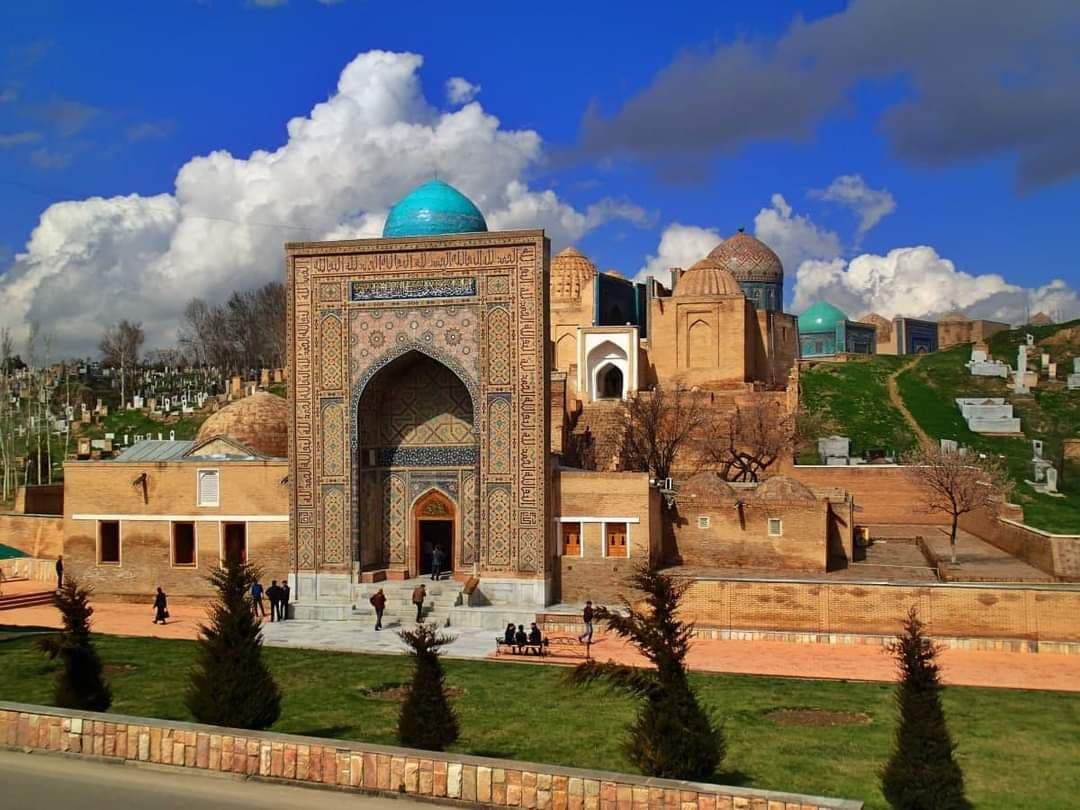
Samarkand does not give itself all at once. It reveals itself in layers, like an illuminated manuscript turned page by page. First comes the stone—warm, golden, almost alive beneath the palm. Then the patterns: those endless arabesques that seem to speak of something greater than decoration, something touching the very order of the world. And finally, the silence. The silence of Shah-i-Zinda’s inner courtyards, where the rows of mausoleums speak not of death but of patience—the patience of a place that has crossed twenty-five centuries without ever losing its dignity.
You think you come for the architecture. You return for the presence.
For Samarkand possesses a rare quality: it does not shout. It does not overdo. Even its splendour seems ancient, accustomed to itself, almost modest beneath its own grandeur. The minarets do not try to impress—they simply stand, like a thought that has remained intact. And in that restraint there is something profoundly moving: the way beauty here asks nothing in return.
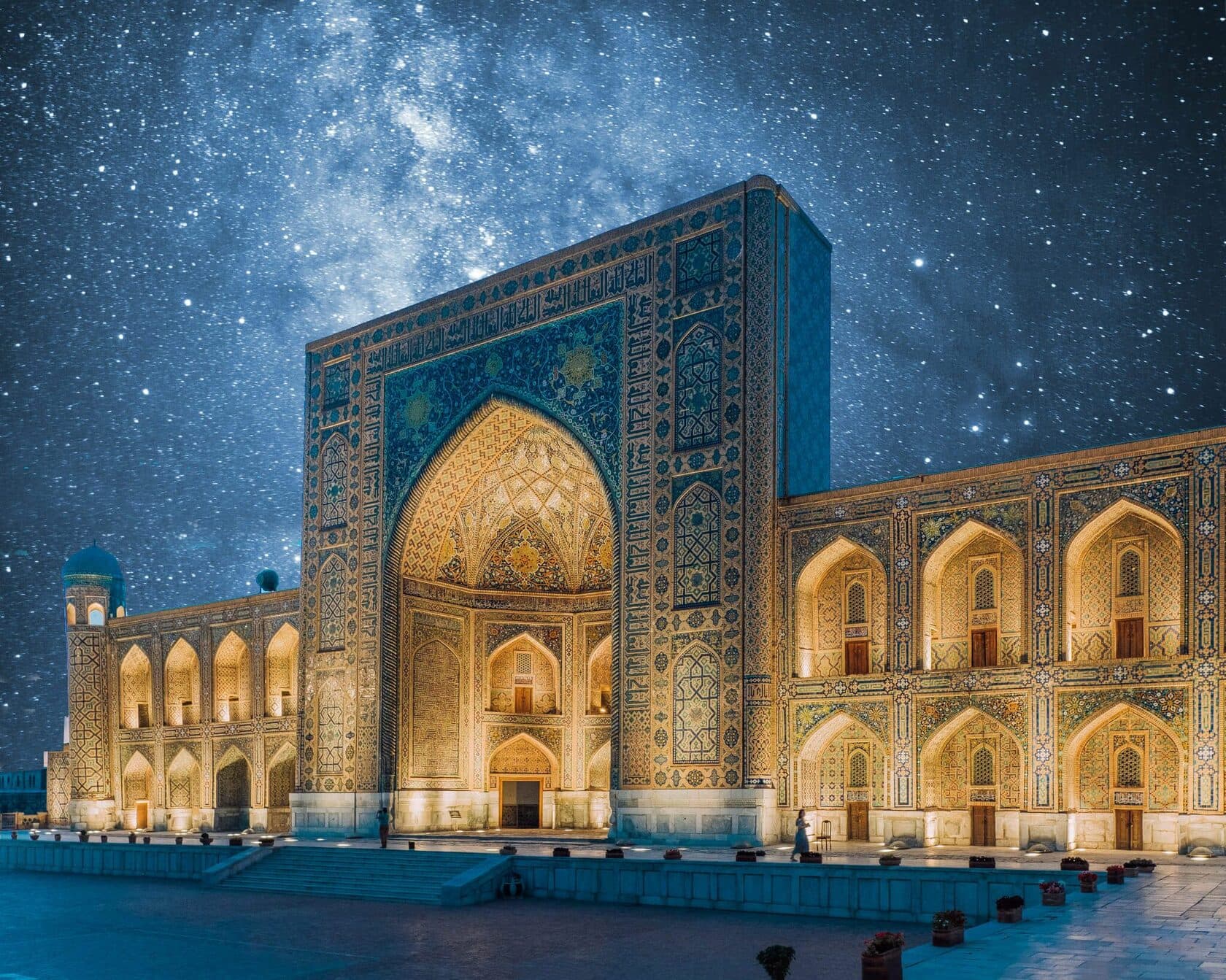
In the morning, when mist lifts over Ulugh Beg’s observatory, you understand that this city did not only build mosques—it mapped the stars. In the evening, when the raking light sets the Registan’s portals ablaze, you sense that time itself hesitates to pass, as though it wished to linger a little longer in this courtyard where everything feels right.
And then there are the living. The artisans crafting silk paper in the workshops of Konigil. The bazaars where spices compose their own mosaic. The children running between the columns like birds crossing a sky of tilework. For Samarkand is not a museum under glass. It is a place that breathes, where the past has not fled—it hovers, it accompanies, it watches over.
We know this city by heart. We live here, we work here, and for years we have guided those who wish to see beyond the photographs. What we offer is not a guided tour—it is an encounter. With a place that changes you, on the condition that you agree, for a few days, to be a little smaller than what surrounds you.
Which, in Samarkand, is rather excellent news.